Two macaques can tap to the beat of music in an experimental study
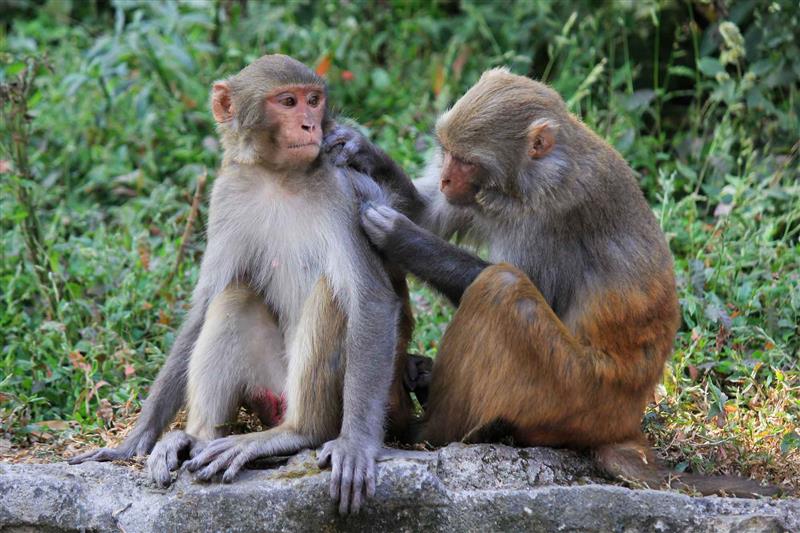
Gilberto and Tomás are two macaques trained to synchronise their movements with the rhythm of a metronome, who were also able to tap to a musical beat, according to a study published in Science. This result contradicts the vocal learning hypothesis, according to which only species capable of complex vocalisations can perceive and follow a musical rhythm.
251127 monos ritmo miquel EN
Miquel Llorente
Head of the Department of Psychology at the University of Girona, associate professor Serra Húnter and principal investigator of the Comparative Minds research group
Although the study presents striking results on rhythmic sensitivity in non-human primates, the conclusions should be taken with great caution. The sample size is extremely small and is based on individuals trained over long periods to perform highly artificial tasks. Although such protocols are standard in neuroscience, they are far removed from the natural repertoire of the species and make it difficult to extrapolate the results realistically. Furthermore, the cost of keeping these animals in such restrictive experimental environments raises the question of whether the scientific benefit outweighs the burden on their welfare.
There are more respectful and potentially more informative methodological alternatives, such as observational studies or ecologically validated experiments in semi-natural environments or primate centres, where temporal and rhythmic processing can be explored without forcing conditions that distort behaviour. In this sense, the work raises interesting questions, but it is still far from offering solid answers about the evolution of rhythm in primates.
251127 monos ritmo alba EN
Alba Castellano Navarro
Doctor of Ethology, research collaborator in the Department of Zoology
For decades, certain cognitive abilities were thought to be unique to humans. The use of tools, for example, was considered a strictly human trait until Jane Goodall observed how chimpanzees in Gombe used twigs to extract termites, demonstrating that they were capable of making and using tools in their search for food (Goodall, 1964).
Culture also ceased to be considered an exclusively human phenomenon when the macaques on Koshima Island surprised the world: a young female began washing sweet potatoes in the river, and this behavioural innovation was imitated by other members of the group, thus documenting a clear case of non-human cultural transmission (Kawai, 1965).
Recently, studies with great apes have questioned another ability that was long considered exclusively human: theory of mind, understood as the ability to attribute to others beliefs, knowledge or intentions different from one's own. Research such as that by Krupenye et al. (2016) has shown that these animals can anticipate the behaviour of others based on false beliefs, a manifestation compatible with incipient forms of theory of mind.
Now, this study, published in Science (Rajendran et al., 2025), adds another piece to this puzzle: musical rhythm. The authors have shown that macaques can detect, anticipate and synchronise with the rhythm of real music, a behaviour that until now was believed to be unique to humans and a few species with complex vocal abilities, such as certain songbirds.
In a series of three experiments, the macaques not only learned to keep time by tapping in sync, but also chose to do so spontaneously, even when it was not necessary to receive a reward. This ability suggests that rhythmic synchronisation is not an “all or nothing” property, but can emerge gradually if certain basic cognitive processes are coordinated.
This finding gives rise to a new theoretical proposal: the 4-component hypothesis (4Cs). According to this hypothesis, any species that can (1) detect auditory patterns, (2) make temporal predictions, (3) coordinate motor actions with those patterns, and (4) associate that behaviour with a reward, could develop some degree of rhythmic musical perception. It is a more inclusive approach than the previous model, based exclusively on vocal learning, and allows for continuity between species.
The authors clarify that this does not mean that macaques experience music in the same way as humans. Unlike humans, who display this ability naturally from childhood, macaques required extensive training and found the task demanding. The motivation to synchronise does not appear to be intrinsic, but rather conditioned by the reward system. Even so, once trained, the macaques generalised the skill to new songs, suggesting the activation of cognitive mechanisms comparable to those of humans.
Overall, this study not only challenges our ideas about animal musicality, but also reinforces a more gradual and evolutionary view of complex cognition. As with tool use, culture and theory of mind, rhythm is no longer a strictly human frontier. The line that separates us from other species with complex cognitive abilities is becoming increasingly blurred, reminding us that we share a common past and also some of the abilities that we believed to be exclusively ours.
251127 monos ritmo ferran ES
Ferran Mayayo
Author of a PhD thesis on rhythm cognition in humans and rats, research support technician in the Language & Comparative Cognition group, Centre for Brain and Cognition
This study addresses the ability to perceive and synchronise rhythmic beats in a species of non-human primates such as macaques. The data presented are based on a rigorous and meticulously designed methodology. The perception of rhythmic beats responds to a cognitive process subject to a certain degree of subjectivity. In this sense, the results of the study suggest that the subjects studied show an ability to perceive and synchronise to the beat of music with a degree of skill not previously observed in macaques. According to the authors, this ability would be latent but would be activated in the presence of certain essential components, such as temporal prediction or association with a reward system.
Regarding the ability of non-human animal species to perceive rhythmic beats, vocal learning (the ability to integrate new vocalisations that are not part of the species' vocal repertoire) has been proposed as one of the requirements for rhythmic perception and synchronisation. However, this study demonstrates that an animal species without vocal learning, such as the macaque, can successfully synchronise to the beat. On a theoretical level, this challenges the hypothesis of vocal learning as a requirement for beat synchronisation, forcing us to reconsider the hypothesis and/or concept of vocal learning.
This research is pioneering in exploring the ability of non-human primates to synchronise to the beat of a real piece of music. Previous research had observed the ability of these animals to synchronise to the beat of a rhythm explicitly composed of beats (e.g., metronome). However, the study goes a step further and examines the ability of macaques to extract and maintain the rhythmic beat of musical pieces, thus increasing the cognitive load of the task. In practice, this means that macaques demonstrate rhythmic abilities previously observed only in certain animal species (mostly with vocal learning), such as spontaneous synchronisation (without training on the stimuli presented) to the rhythmic beat, or the abstraction of an explicit beat to a subjective beat integrated into a complete piece of music.
It is important to highlight other relevant aspects of the study. According to the methodology used, it is possible to observe rhythmic synchronisation in macaques under the experimental conditions described, although this does not imply that this is the natural behaviour of macaques. On the other hand, the paradigm is based on an extensive prior training process to successfully complete the experiments, and on the presence of a reward system to activate behavioural responses in macaques, a fact that contrasts with the behaviour and abilities associated with humans in this context. Overall, this study is of notable scientific relevance, contributing to the advancement of knowledge about the rhythmic abilities of non-human primates and suggesting a review of the evolutionary relationships between species.
251127 monos ritmo antonio EN
Antonio J. Osuna Mascaró
Postdoctoral researcher at the Messerli Research Institute at the University of Veterinary Medicine Vienna (Austria), animal cognition specialist
In comparative cognition, we know that intensive training can bring out abilities that do not appear spontaneously in the natural behaviour of a species. This has been seen, for example, in recent studies with crows and macaques, where animals that do not use tools in the wild learned to manipulate them with great skill after a prolonged period of training. These cases show that just because a behaviour is not observed in nature does not mean that the species completely lacks the mechanisms necessary to develop it: sometimes, all that is needed is the right context for the ability to be expressed.
For years, it was thought that the ability to move to the beat of music was almost exclusive to species with complex vocal learning, the so-called “vocal learners”, such as humans and some birds (such as the cockatoos I work with at the Goffin Lab in Vienna). However, after extensive reward-based training, macaques were able to identify and follow the rhythm of real songs. In fact, they even tended to spontaneously synchronise with the correct tempo of new songs, even though doing so was not necessary to obtain a reward. This discovery does not completely invalidate the traditional hypothesis of vocal learning, but it does suggest a more nuanced scenario: it is possible for macaques to achieve behaviour similar to that of vocal learners, although probably through alternative mechanisms and thanks to intensive reinforcement.
This interpretation fits with the so-called “four-component hypothesis” (4Cs), which proposes that synchronisation with music does not depend exclusively on vocal learning, but on the coordination of general processes such as auditory pattern detection, temporal prediction, audiomotor control and reinforced learning. Under this approach, “vocal learners” would have a system that is specially prepared and motivating for rhythmic synchronisation (which would explain their natural ease in moving to the beat), while in species such as macaques this ability can emerge if the necessary components are adequately reinforced. In other words, macaques are not “musical” by nature, but they can synchronise with the rhythm by following a different path, driven by reward. Findings such as these remind us that, in the evolution of behaviour, different paths can lead to the same result.
Vani G. Rajendran et al.
- Research article
- Peer reviewed
- Animals